Using HTTP URLs with CHeKT Speakers
 CHeKT Speakers support HTTP URLs that can be used within Automation Rules to trigger audio playback.
 Before configuring an HTTP Request action, verify that the speaker is running firmware version 3.5.1 or later, as earlier firmware versions do not support this functionality.
Verify Speaker Firmware
- Log in to the speaker's web interface.
- Confirm the speaker is running Firmware Version 3.5.1 or higher.
- Upgrade the firmware if necessary before proceeding.
 For help updating speaker Fimware, click here.
Enable the HTTP URL
Log in to the speaker's web interface.
Navigate to the Alarm tab.
Locate the desired HTTP URL.
Enable the Play File option.
All HTTP URLs use User File 1 for playback.
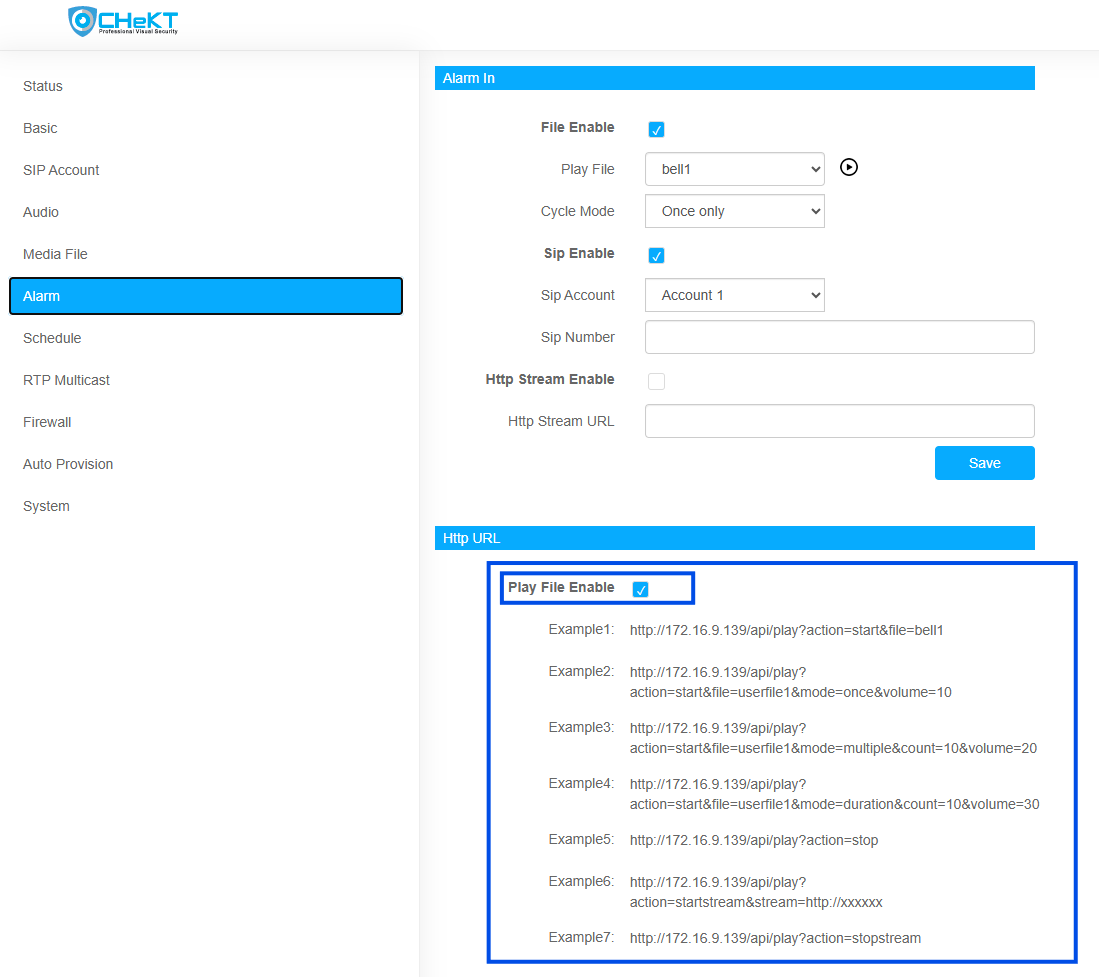
Select the Audio File
Navigate to the Media File tab.
Upload or select the audio file you want the speaker to play.
Assign the desired audio file to User File 1.

This is the audio file that will be played whenever the configured HTTP URL is triggered.
Configure the Automation Rule
The HTTP URLs displayed on the speaker's web interface already include the speaker's local IP address. Simply copy the desired URL and paste it into the Automation Rule.- If the HTTP Action test is unsuccessful, verify:
- The speaker is online and reachable from the CHeKT Bridge.
- Firmware is version 3.5.1 or later.
- Digest Authentication is selected.
- The correct username and password are entered.
- An audio file has been assigned to User File 1 under the Media File tab.
- The Play File option is enabled for the selected HTTP URL.
Once configured successfully, the Automation Rule will trigger the selected audio file whenever the rule conditions are met.